“Although the MENA region contains 6% of the world’s population, it holds only 1% of the planet’s renewable freshwater” (Washington Institute, 2021).
Today, the Middle East and North Africa region (MENA) finds itself at the center of a global water crisis, as it is considered the most water-stressed region in the world. Its communities face exacerbated droughts, diminishing rivers, and disappearing springs, threatening livelihoods, food security, and stability.

Impact of the water crisis on local MENA communities
Communities across the MENA region, particularly in rural areas, bear the socio-economic burdens of the water crisis in many aspects of their lives.
- Over 60% of the region’s population lives under high or very high water stress, compared to the global average of approximately 35% (ReliefWeb, 2017).
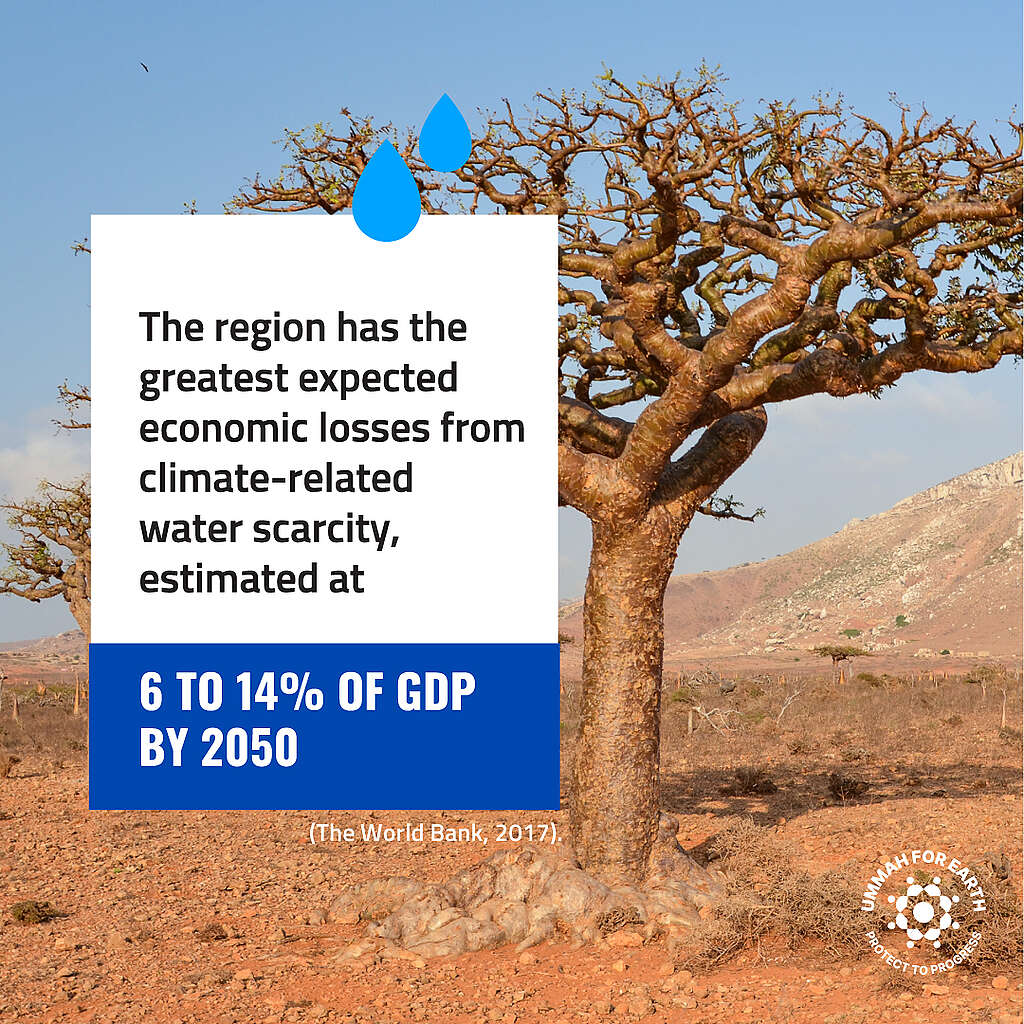
- The region has the greatest expected economic losses from climate-related water scarcity, estimated at 6 to 14% of GDP by 2050 (The World Bank, 2017).
- Agriculture, the source of livelihoods of most of the region’s rural communities, accounts for more than 80% of water usage, making farmers vulnerable to droughts and groundwater exhaustion (UNICEF 2021).
- “Flood and drought risks are increasing and are likely to harm the poor disproportionately” (The World Bank, 2017).
These, among many others, are how the region is affected by water scarcity. As water resources break down, people experience displacement and abandonment of land or rely on expensive private water sources that further reinforce disparities in society.
The collapse of watersheds is at the core of the crisis
The water crisis that the region is witnessing is not only due to low rainfall or climate change; it is also a result of the collapse of watersheds as a consequence of uncontrolled urbanization, deforestation, pollution, and substantial extraction. For example, the Dead Sea, once supported by the Jordan River watershed, has lost about one-third of its surface area since the early 20th century (The Hague Institute for Global Justice and others, 2017) due to major reductions in watershed flows.
When watersheds slowly collapse, water quality declines, floods increase, and ecosystems that support agriculture and livelihoods disappear. This is why solutions must be found to protect them.
Hima system (الحِمى): a solution from the community to the community
Rooted in Islamic faith and traditions, Hima (الحِمى) is a community-managed protected area with an extremely effective and locally adapted approach to natural reserves. If we go back in history, we find that Hima (الحِمى) systems have been established to safeguard forests and water sources, among others.
If societies work on reviving Hima (الحِمى) today, it can be harnessed as a nature-based community solution that:
- Preserves watersheds and recharge zones
- Prevents pollution and over-extraction
- Restores soil health
- Ensures equitable access to water resources
- Creates socio-economic benefits like green jobs and safeguards livelihoods
Hima (الحِمى) systems puts the well-being of people and the environment first!
Water conservation is equal to the care for life
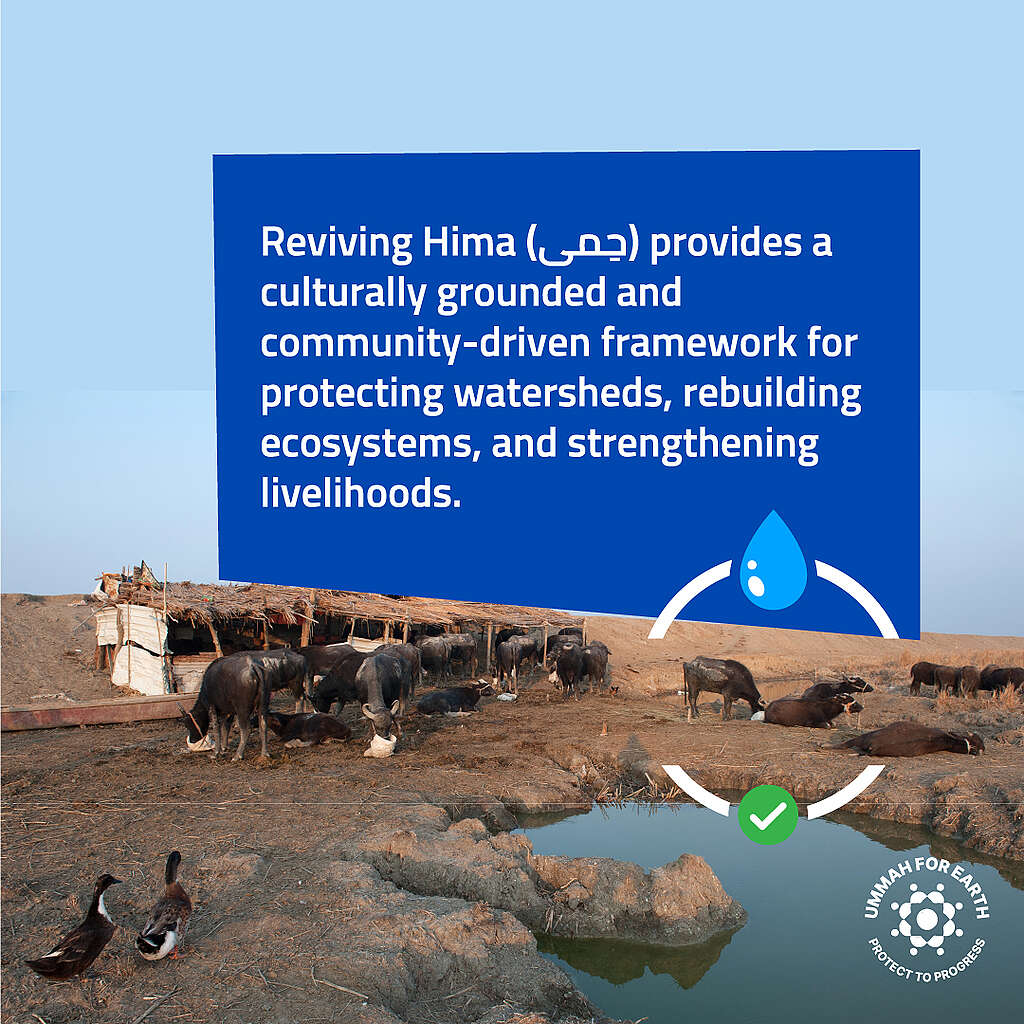
In the MENA region, water scarcity contributes to defining the socio-economic conditions and environmental future. This is why protecting water means protecting people as well. Reviving Hima (حِمى) provides a culturally grounded and community-driven framework for protecting watersheds, rebuilding ecosystems, and strengthening livelihoods.
In its essence, this solution resonates with the concept of Hifz al-Nafs (preservation of life) of Maqasid al-Shariah (purpose of Shariah laws). It recognizes the significance of water conservation and the preservation of watersheds for the protection of life, human health, and food systems.